Getting ready for the premiere


a contemporary music collective.

“This work is for me a return to the rhetorics and formal structures of my “misspent” youth playing in punk-rock bands on the New Jersey shore in the late 80’s. The music we wrote was music with much ornamentation and embellishment, but little improvisation as the term is generally used— there was little time for expansive guitar solos in songs clocking in at under two minutes. In this temporally compressed grammar (or perhaps “syllabary” is a better term) distinctions between phrase and riff and verse were unclear, yet relevant, for this was music with a flair for form, form that could be felt in the body, not merely heard in the mind’s ear. Juxtaposition was privileged over transition, and repetition over development. Our ears brimmed with The Germs and The Minutemen, but also the more aggressive side of the British progressive rock scene. First among these groups was always King Crimson and its leader Robert Fripp. The particular harmonic and formal approaches of that group have had substantial impact on my compositional approach, and my approach to functioning and persisting as a musician in the late modern."
My first blog post ever! I'm excited.
We've been rehearsing Babbitt for Friday, and it is grueling. As Ben observed, we've been proceeding at a rate of about 50 bars per hour! Damn, that is slow! It's the very intricate rhythms, especially the irrational tuplets that don't align with strong beats, that are the most difficult.
But it is such incredible music, so incredibly rich and eventful. As Babbitt said, "I want a piece of music to be literally as much as possible". I love that, I always say that. This is some of my favorite stuff; it's sad that only now, after his death, is his music getting played more.
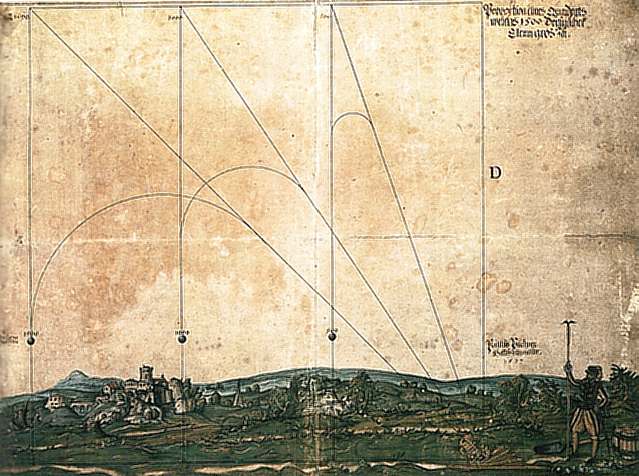
"Place is thought to be something important and hard to grasp, both because the matter and the shape present themselves along with it, and because the displacement of the body that is moved takes place in a stationary container, for it seems possible that there should be an interval which is other than the bodies which are moved. The air, too, which is thought to be incorporeal, contributes something to the belief: it is not only the boundaries of the vessel which seem to be place, but also what is between them, regarded as empty. Just, in fact, as the vessel is transportable place, so place is a non-portable vessel. So when what is within a thing which is moved, is moved and changes its place, as a boat on a river, what contains plays the part of a vessel rather than that of place. Place on the other hand is rather what is motionless: so it is rather the whole river that is place, because as a whole it is motionless.
Hence we conclude that the innermost motionless boundary of what contains is place."
– Aristotle, The Physics (Book IV, chapter 4)

I have been working for a long time with the idea of a world parallel to the reality in which we live. I am always trying to bring to reality this virtual world in order to shape my aesthetic. After many attempts I have realized that the best way to achieve my ambition to recreate that world for a few moments, to make it real through music is the electronic music.This technique of contemporary music allows me to express my vision of that separate world through its unlimited palette of means and techniques.And now my goal is to reach a sort of communication or feedback between our world and this virtual world of the electronic through a physical component in the work which is the chamber ensemble.
The system that rules the communication between reality and virtuality and also the processes of composition and interaction is the composition's language called “spectral music”.This musical system uses as starting material the overtone series of natural sounds so that the pieces are constructed on the development of the sound spectrum. The different characteristics from these sounds, analyzed by means of computers, will influence diverse parameters in the music, like harmony, melody, rhythm and form. It is a re-synthesis of the sound through acoustic instruments which main focus is the overall timbre.
road, river and rail is not only a musical composition in the usual sense. It is also a sort of multi-interaction on different levels between real and virtual life.These interaction-levels comprise, not only a performance-interaction, but also an interactive creation by the composition process as well as by the interpretation.The concepts of reality and virtuality are here applied to the two sides of the composition: the acoustic and the electronic one.
At the beginning I needed some materials of the real life as a starting point.These materials should be not only beautiful or exquisite, but also structurally interesting and suitable for a both artistic and digital processing.
Some years ago, when I was in search of another more appropriate material to work with, I got to know the bells of Korean Buddhist temples. Immediately I realized that the sounds of these bells were perfect for the accomplishment of my aesthetic ideal for many reasons.
In the first place, their overtone spectra is totally different and a lot richer than the one of any instrument.They are even quite different from a bell to another one and they also vary with the form to strike them.The formants are grouped in zones of the spectrum which are perfectly suitable to be played by acoustic instruments. Secondly, in spite of its uniformity the envelope is full of variations however maintaining a linearity appreciable at first, which facilitates the formal work.Thirdly, the character of the sound is varied, offering a multitude of small forms or modulations usable in the composition.
First of all I analyzed these sound-samples by a computer. With the aid of the AudioSculpt Software developed in the IRCAM in Paris, I began to analyze sounds through its spectral representations or Sonograms.This program analyzes the sound using a short-time spectral analysis, which consists of dividing the sound into small segments and looking at the frequency contents of each segment by creating a spectral representation of it. Each of the segments obtained in this way is processed by way of an algorithm which calculates its short-term spectral representation through a Fast Fourier Transform (FFT). Once obtained the graphical representation of the partial components of the sound, which is the Sonogram, I can find the exact frequencies of these overtones and translate them to musical pitches that will serve me as structural material for both parts of the composition:They will define the pitches which I will use on the electronic and the notes of the instruments as well as the musical "colors" or "textures" of both.
For the construction of the electronic I needed raw materials, and so take place the first interaction-step: electronic, will be a reflection of the "real" musicians: I built the electronic starting from samples of the same instruments which play in the ensemble: clarinet, violin, viola, violoncello and piano. In this way I will reach an exchange of information between the real and the virtual world: Something taken from reality will come into reality again.The structural materials (the frequencies of the sound's partials) steer the control of the recorded sounds of the instruments and so will be formed the electronic, the virtual part of the composition.The instruments interact with the original sounds and with the electronic in a structural level: as they will be the raw materials for the electronic, they will define textures and colors.
Both parts of the work, the real one, the instruments, and the virtual one, the electronic, will be processed with various systems whose procedures also interact in reciprocal form:
- The process of composition will influence the same to the both components, as far as I have conceived and the electronics as a sort of "virtual ensemble".A compositional step on the instruments will have an effect or even determinate the next step in the electronic. For the same reason the electronic regulate the next action of the instruments.
The final product of these processes will be the electronic in form of digital audio-tracks (virtual) and the instrumental part as a score (real). By the performance, the electronic will interact with the musicians (score), modifying the interpretation of the work in a controlled manner: the musicians react to the electronic as it were another live musician. The different parameters of the electronic and its spatialization will influence the musicians on how they play their parts.The electronic also creates the space in which the musicians perform and guides them through the composition.
- The realization process will be on the same way an interactive creation in other level: I process the sounds for the electronic through different programs and plugins which will change its characteristics, textures, colors...The montage of these sounds will also produce new gestures.The process and montage of the instrumental part will influence and be influenced by the electronic on the level of "choice" or "decision" for the next gesture on the electronic or the instruments.
The audience will be the observer of the last step on a chain of interaction processes, a sort of feedback without the perception of the dry signal.They will be confronted at the same time with the virtual part of the work (electronic) as well as the real one (score- musicians).The listener will also go through a sort of live-interaction, which will be processed as a perception in a subjective way.
The last step of the interaction-chain will be also controlled through the spatialization of the electronic: the audience and the musicians will perceive the electronic in a dynamic movement through the room, which will also influence the subjective recognition of the audio data and so the final impression (audience) and the interpretation (musicians).

